
Water Tank Refurbishment Services That Last
Wed, 21 Oct 2026
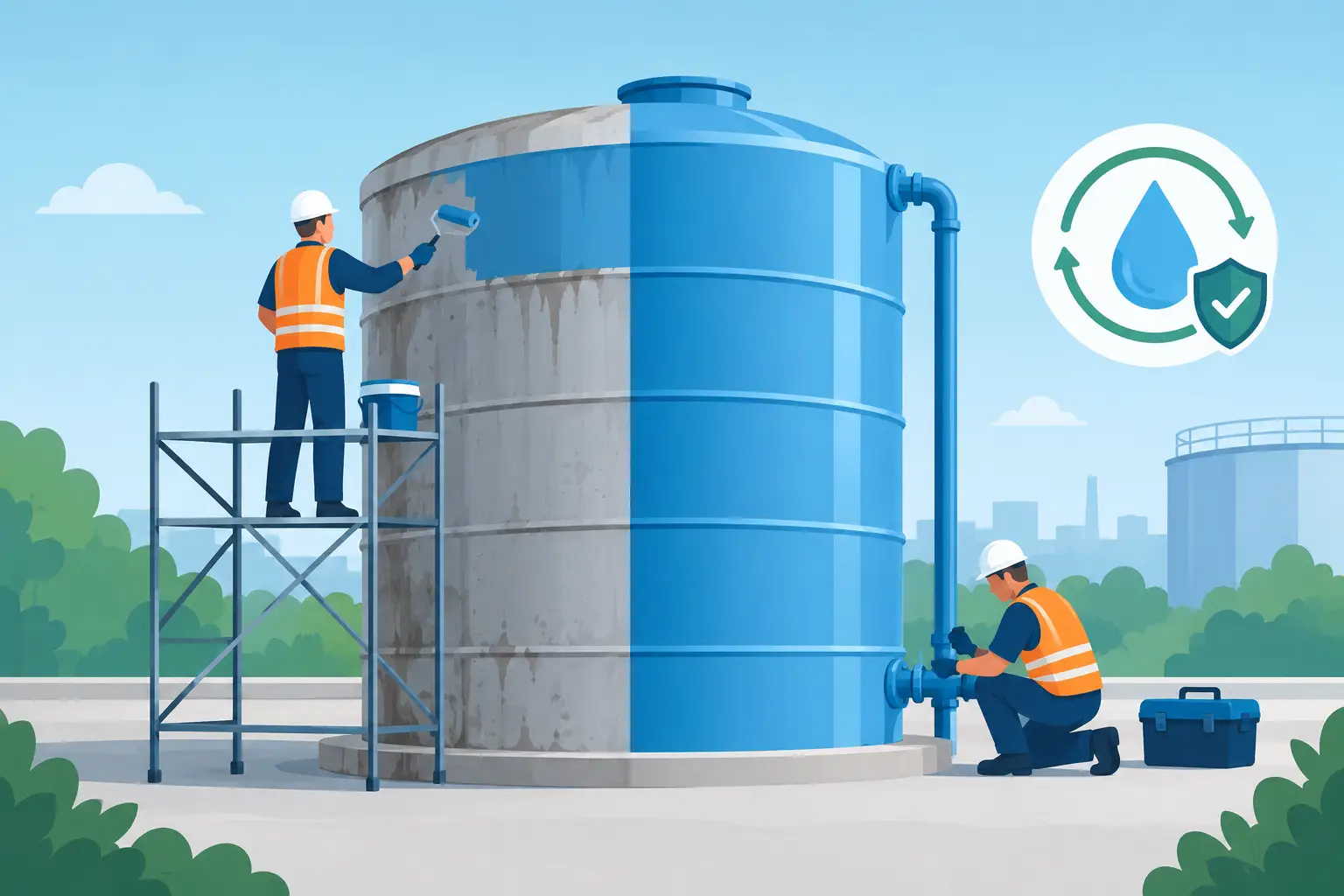
A tank can look sound from ground level while corrosion is advancing behind a liner, around roof penetrations or at the base of internal fittings. By the time a site notices discoloured water, falling pressure, unexplained consumption or a wet patch near the tank pad, the defect may already be affecting operations. Water tank refurbishment services address these issues before a repair becomes an unplanned replacement project.
For facilities managers, strata teams and industrial operators, the objective is not simply to make an ageing tank look better. It is to restore a dependable water asset with a clear scope, controlled shutdown period and a realistic remaining service life. That means assessing the tank structure, its coating or liner, associated pipework, access points and the quality requirements of the stored water.
When refurbishment is the better commercial decision
Replacement is sometimes necessary, particularly where structural integrity has been compromised beyond economical repair. But many tanks can be returned to reliable service through targeted capital works. This is often the more practical option where the tank footprint, connected services and site access make removal difficult or disruptive.
A refurbishment can extend the useful life of steel, concrete and selected modular tanks by addressing the failure mechanism rather than treating the visible symptom. For example, resealing a roof penetration may stop a leak, but it will not resolve widespread internal corrosion caused by coating breakdown. Likewise, cleaning sediment from a rainwater tank improves immediate water quality, but it does not correct a damaged liner or ineffective overflow arrangement.
The right decision depends on the tank's condition, its role in the property and the consequences of failure. A tank supplying irrigation can generally be isolated more easily than one supporting process water, amenities or fire-related infrastructure. Where continuity is critical, the refurbishment plan may need temporary water storage, staged works or carefully scheduled shutdowns.
Signs a water tank needs more than routine maintenance
Routine inspections and cleaning are valuable, but they are not a substitute for corrective works when the tank envelope is failing. Facility teams should investigate recurring leaks, unexplained drops in stored volume, rust staining, failed sealants, sediment build-up, damaged screens and persistent pump cycling.
Other warning signs are less obvious. A tank that is routinely overflowing may have a blocked outlet, poorly configured level controls or an ineffective collection system. Water that develops odour or visible contamination can point to inadequate roof screening, deteriorated internal surfaces, vermin entry or long periods of low turnover. On commercial sites, these issues can lead to irrigation failures, tenant complaints, higher potable-water use and urgent call-outs at the worst possible time.
Access and safety matter as much as the tank itself. Corroded ladders, unsecured lids, failed handrails and unsafe access points can turn a simple inspection into a safety exposure. Any refurbishment scope should consider the full asset, not just the point where water is escaping.
What water tank refurbishment services should include
Effective water tank refurbishment services begin with a condition assessment. The contractor should establish the tank type, capacity, material, use, surrounding site constraints and visible defects before recommending a solution. Where internal inspection is required, the work must be planned around safe access, isolation, cleaning requirements and the water service being protected.
The scope may include cleaning and sediment removal, corrosion treatment, repair or replacement of linings and coatings, resealing joints and penetrations, roof repairs, replacement of screens, access covers, valves, overflows and level-control components. In some cases, pipework modifications or pump adjustments are required to make the renewed tank perform as intended.
Coating and lining selection needs careful judgement. The right product depends on the tank substrate, existing surface condition, intended water use, moisture conditions and application environment. A low-cost coating applied over inadequately prepared steel may look acceptable at handover, then fail prematurely. Surface preparation, curing conditions and workmanship are where long-term outcomes are won or lost.
For tanks that store water used in occupied buildings or public-facing facilities, hygiene controls must be built into the work plan. This includes managing debris, preventing contamination during repairs and confirming that components are appropriate for the intended application. Requirements can vary significantly depending on whether the tank serves irrigation, washdown, amenities, process operations or a fire water system.
Plan the work around site operations
Tank works can affect more than water storage. Isolation may interrupt irrigation, washdown points, trade operations or connected pumps and controls. A practical contractor will identify these dependencies early and coordinate works around tenancy activity, production schedules, weather exposure and site access restrictions.
This is especially relevant for strata communities, schools, healthcare settings and industrial sites where an apparently minor outage can quickly create complaints or operational delays. Clear communication about shutdown windows, temporary arrangements and recommissioning checks keeps the project controlled.
Refurbishment versus replacement: the trade-offs
Refurbishment is not automatically the lowest-cost solution, and replacement is not automatically the safest long-term option. The best pathway is based on lifecycle cost, not the first quotation alone.
Refurbishment can reduce waste, preserve existing infrastructure and avoid excavation or crane access associated with a new tank. It may also be completed faster where the tank structure remains fundamentally sound. However, concealed corrosion, failed foundations or extensive deformation can change the economics once the tank is opened and inspected.
Replacement may provide greater certainty where capacity needs have changed, the tank no longer suits current water demand or repeated repairs have already consumed maintenance budgets. It can also be the better choice when upgrades to pumps, treatment equipment or collection systems require a different tank configuration.
The key is to document the condition and options clearly. Decision-makers need to understand the likely remaining asset life after refurbishment, what is included in the defect rectification, which risks remain, and what planned maintenance will be required afterwards. This prevents a short-term patch from being presented as a long-term capital solution.
Protecting the investment after the works
A refurbished tank still needs planned maintenance. Roof debris, damaged screens, failed overflows and small leaks can undo good work if they are left unattended. The maintenance frequency should reflect the tank's location, water source, surrounding trees, site activity and the criticality of the stored water.
A practical programme generally includes visual external checks, periodic cleaning, inspection of screens and lids, confirmation of overflow performance, leak monitoring and review of pumps, valves and level controls. For high-use assets, water quality checks and performance monitoring may also be appropriate. The exact scope should be tailored rather than copied from another property with different risks.
Recording inspections and repairs helps facility teams spot recurring faults and plan capital expenditure before an emergency develops. It also gives property managers a clearer basis for explaining maintenance decisions to owners, committees or tenants.
A coordinated approach reduces site disruption
Water tank works often overlap with plumbing, electrical controls, roofing, access safety and irrigation infrastructure. Managing these interfaces through separate contractors can create gaps in responsibility, especially when a leak has more than one cause. A failed roof flashing, for instance, can affect tank water quality, internal corrosion and downstream pump reliability.
TWS Service & Solutions approaches tank refurbishment as part of the wider water and facility asset system. That means defining the condition issue, coordinating the required trades and delivering a scope that considers operational continuity as well as the tank repair itself.
The most useful time to assess a tank is before the next dry spell, peak irrigation period or urgent tenant complaint. A documented inspection and properly scoped refurbishment can turn an ageing water asset from a recurring risk into a manageable part of the site's maintenance plan.