
Remote Infrastructure Monitoring: Why Sydney Businesses Need Real-Time Visibility
Fri, 24 Jul 2026
There was a time when infrastructure largely existed where people worked.
A technician walked into a plant. A supervisor checked equipment in person. A maintenance team could physically inspect a site before a small issue became an expensive one.
That picture still exists in some industries, but it no longer reflects how many Australian businesses actually operate.
Across Sydney and regional New South Wales, organisations now manage assets scattered across industrial estates, construction projects, utilities, transport networks, water facilities and remote operational sites. Some locations are staffed only occasionally. Others sit hundreds of kilometres away from the nearest support team.
The challenge is obvious.
Infrastructure does not stop ageing simply because nobody is standing beside it.
That reality is one reason demand for Remote Infrastructure Sydney solutions continues to grow. Businesses are finding that distance creates risks, and those risks become expensive when visibility disappears.
Distance Has a Way of Hiding Problems
Most infrastructure failures do not arrive dramatically.
A pump begins operating outside normal parameters.
Power consumption slowly increases.
Environmental conditions drift beyond acceptable limits.
Communication equipment starts dropping intermittent signals.
None of these issues necessarily trigger immediate alarms. In fact, they can remain unnoticed for weeks.
The problem is that small irregularities often compound. A minor equipment fault can eventually affect production schedules, safety requirements or service reliability.
On paper, regular site inspections sound sufficient.
In practice, they rarely provide a complete picture.
A technician may visit once a week or once a month. The equipment, meanwhile, continues operating every hour of every day.
There is a large gap between those two realities.
Visibility Changes Decision-Making
One of the less discussed benefits of monitoring infrastructure remotely is psychological rather than technical.
Decision-makers become less reactive.
When managers can see operational data continuously, they spend less time guessing.
That distinction matters more than many organisations realise.
Without reliable information, people tend to make decisions based on assumptions, previous incidents or worst-case scenarios. Sometimes that caution is justified. Sometimes it leads to unnecessary maintenance costs.
Continuous monitoring creates a different environment. Teams can respond to actual conditions rather than possibilities.
Not perfect certainty.
Just better information.
And better information usually leads to better decisions.
Sydney's Infrastructure Network Is Becoming More Complex
Sydney is growing, although growth is rarely as tidy as planning documents suggest.
New developments emerge on city edges. Industrial facilities expand into areas where staffing remains limited. Transport systems become increasingly interconnected.
As infrastructure networks spread geographically, managing them through traditional inspection models becomes harder.
This is where Remote Infrastructure Sydney systems increasingly fit into the conversation.
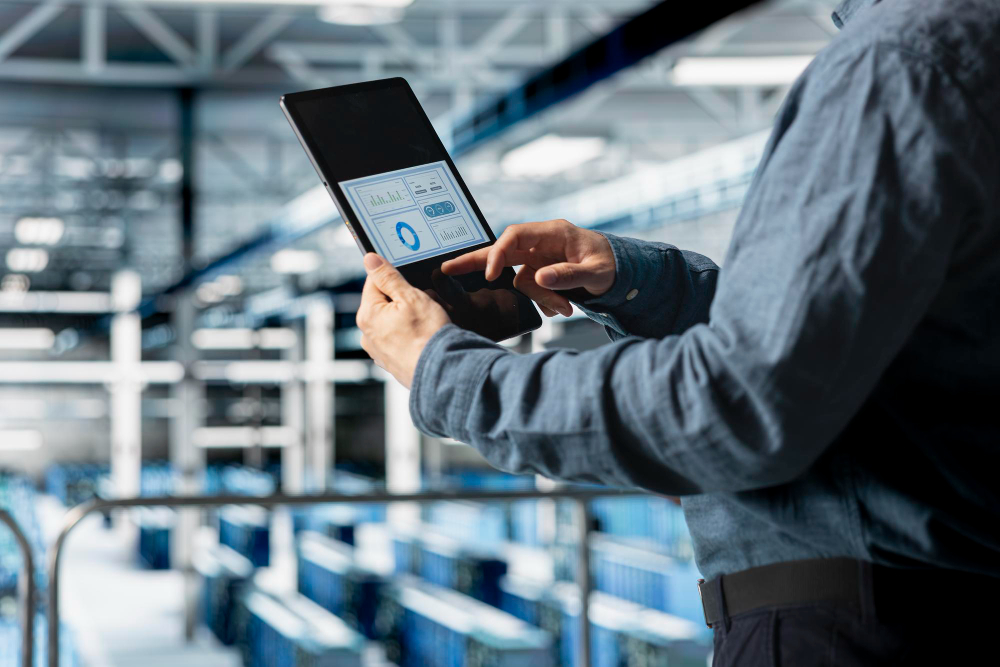
They allow organisations to observe equipment, environmental conditions and operational performance without requiring constant physical presence.
That may sound straightforward.
Yet the impact can be substantial.
A maintenance team that previously spent hours driving between locations may identify problems before leaving the office. A utility operator can monitor performance across multiple assets simultaneously. Construction managers gain a clearer understanding of site conditions between visits.
The value isn't simply convenience.
It is awareness.
The Cost of Not Knowing
Businesses often focus on the direct cost of infrastructure failure.
Repairs.
Replacement parts.
Emergency callouts.
Those expenses are easy to measure.
The indirect costs tend to be less visible.
Operational interruptions can delay projects. Equipment downtime may affect customers. Safety incidents can trigger investigations and compliance concerns.
Then there is reputation.
A prolonged outage can damage trust in ways that spreadsheets struggle to capture.
This is partly why interest in remote infrastructure monitoring sydney services has expanded across industries. Organisations increasingly recognise that the financial impact of uncertainty often exceeds the cost of monitoring itself.
Not always.
But often enough to change priorities.
Remote Sites Create Their Own Set of Challenges
Some infrastructure is simply difficult to reach.
Mining support facilities, water treatment assets, communications towers and energy infrastructure frequently operate in locations where routine inspections require significant time and travel.
The challenge becomes more pronounced when weather conditions intervene.
Heavy rain. Flooding. Extreme heat.
Australia has never been particularly gentle on physical assets.
Remote sites must continue functioning even when access becomes difficult.
That reality has driven growing interest in remote site monitoring sydney solutions that provide visibility without requiring constant travel.
Of course, monitoring alone does not solve every problem.
A failed component still requires repair.
A damaged system still needs attention.
But knowing about an issue immediately is generally preferable to discovering it days later.
Few operators would argue otherwise.
The Shift Toward Predictive Maintenance
For decades, maintenance largely followed two models.
Fix equipment after failure.
Or service equipment according to a fixed schedule.
Neither approach is ideal.
The first can be costly. The second can lead to unnecessary maintenance activity.
Predictive maintenance attempts something different.
By monitoring equipment behaviour over time, organisations can identify patterns that may indicate developing faults. Temperature changes, vibration anomalies, power fluctuations and performance deviations often provide early warning signs.
The concept sounds simple.
The execution is not.
Interpreting large volumes of operational data requires systems capable of recognising trends humans might overlook.
That is one reason AI infrastructure monitoring sydney technologies are receiving increased attention.
There is a tendency to overstate what artificial intelligence can achieve. Marketing departments occasionally get carried away.
Still, when applied appropriately, these systems can help identify unusual patterns before they become operational problems.
The technology is useful.
The hype surrounding it is sometimes less useful.
Those are not the same thing.
Security Has Entered the Conversation
Infrastructure monitoring was once primarily associated with operational performance.
Today, security plays a much larger role.
Connected infrastructure creates opportunities for improved visibility, but it also introduces additional risks.
Organisations must consider network security, access controls and data protection alongside operational monitoring requirements.
This has changed how monitoring platforms are designed and deployed.
A modern monitoring strategy is rarely just about collecting information.
It is also about protecting it.
That balancing act will probably become more challenging as infrastructure networks continue expanding.
Why the Future Looks Increasingly Remote
The phrase "remote infrastructure" occasionally gives the impression that people are being removed from the equation.
That is not really what is happening.
Human judgement remains essential.
Engineers still interpret findings. Technicians still perform repairs. Managers still make decisions.
What has changed is the flow of information.
People no longer need to be physically present to understand what is happening.
That shift appears likely to continue.
Infrastructure is becoming more distributed, more connected and, in many cases, more difficult to manage through traditional methods alone.
For businesses operating across multiple sites, the question is gradually changing.
It is no longer whether monitoring should occur remotely.
The more relevant question is how effectively organisations can use the information they collect.
And that answer varies from one operation to the next.
What remains consistent is the underlying reality: infrastructure performs better when somebody knows what is happening before problems become impossible to ignore.
In a city as expansive and operationally diverse as Sydney, that awareness is becoming less of an advantage and more of an expectation. The organisations that recognise this early often find themselves responding faster, planning better and spending less time dealing with avoidable surprises.
Infrastructure has always required attention.
The difference now is that attention no longer depends on proximity.
Frequently Asked Questions
Q: What is remote infrastructure monitoring and why is it important in Sydney?
A: Remote infrastructure monitoring allows businesses to track equipment, systems and assets from a central location using connected sensors and monitoring platforms. In Sydney, where organisations often manage multiple facilities, construction sites and industrial assets across large areas, remote monitoring helps identify issues early, reduce downtime and improve operational efficiency.
Q: How can businesses improve infrastructure management with AI?
A: AI can analyse large volumes of operational data and identify patterns that may be difficult for people to spot. This helps businesses detect unusual equipment behaviour, predict maintenance needs and respond to potential issues before they become costly failures. Over time, AI-supported monitoring can improve planning and reduce unnecessary maintenance work.
Q: What are the benefits of remote monitoring for commercial facilities?
A: Remote monitoring gives facility managers greater visibility over building systems, equipment performance, energy usage and environmental conditions. It can help reduce operational disruptions, improve maintenance scheduling, lower travel requirements and support faster responses when problems occur.
Q: Why are Sydney businesses adopting smart infrastructure solutions?
A: Many Sydney businesses are managing increasingly complex operations across multiple locations. Smart infrastructure solutions provide real-time information, improve decision-making and help organisations maintain assets more effectively. They also support cost control by reducing unexpected failures and improving resource allocation.
Additional FAQs
Q: What is remote infrastructure monitoring?
A: Remote infrastructure monitoring is the process of tracking and managing physical assets, equipment and systems without being on-site. It uses connected devices, sensors and communication networks to provide real-time visibility into infrastructure performance and condition.
Q: Why is remote infrastructure management important in Sydney?
A: Sydney businesses often operate across diverse locations, including commercial buildings, industrial facilities, transport networks and utility assets. Remote infrastructure management helps organisations maintain oversight of these assets, improve operational reliability and reduce the need for frequent site visits.
Q: How does AI improve infrastructure maintenance?
A: AI helps maintenance teams move beyond fixed schedules by identifying trends and warning signs that may indicate developing faults. By analysing equipment data continuously, AI can support predictive maintenance strategies that reduce downtime and extend asset lifespan.
Q: What types of infrastructure can be monitored remotely?
A: A wide range of infrastructure can be monitored remotely, including electrical systems, water and wastewater facilities, telecommunications equipment, transport assets, HVAC systems, industrial machinery, renewable energy installations and commercial building infrastructure.