
Reactive Maintenance for Commercial Properties
Sun, 11 Oct 2026
A ceiling leak over a reception desk, a roller door that will not open at shift change, or an air-conditioning fault during a hot week can quickly become more than a maintenance request. For occupied sites, reactive maintenance for commercial properties is the work that protects people, keeps operations moving and prevents a small defect from becoming a costly interruption.
Reactive work is unavoidable. Pipes burst, electrical components fail, storms expose weak roof sections and high-use assets eventually break down. The difference between a contained incident and an operational problem is the quality of the response: accurate diagnosis, appropriate trade coordination, safe repairs and clear follow-up to address the underlying cause.
What reactive maintenance means in practice
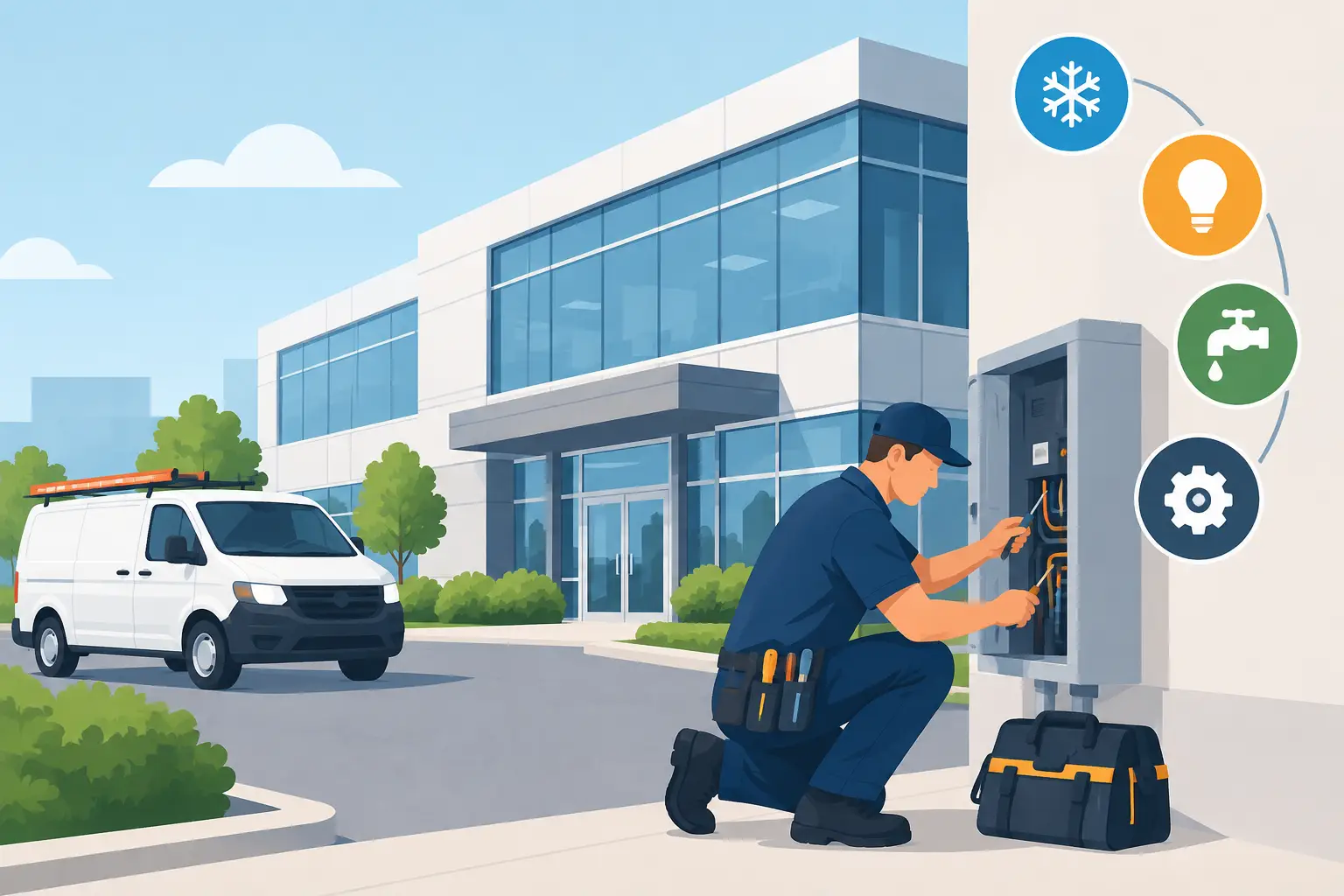
Reactive maintenance is corrective work carried out after a fault, failure or urgent defect is identified. It may be requested by a tenant, detected during a site inspection or triggered by an alarm, leak, outage or safety concern. The priority is to make the area safe, restore essential service and establish what is required for a durable repair.
For commercial property managers, this can range from replacing a failed tapware component to isolating a water leak, repairing storm damage to metal roofing, restoring lighting in a car park or responding to a fire-system defect. In industrial, public and strata environments, the work may also involve managing access, isolations, permits, traffic movements and communication with multiple stakeholders.
A fast attendance alone does not equal a good outcome. A patch that stops visible water ingress but leaves failed flashing, blocked gutters or deteriorated roof penetrations unresolved can simply defer the problem until the next rainfall event. The same applies to repeatedly resetting an electrical circuit without identifying the load issue or damaged component causing it to trip.
Why reactive maintenance for commercial properties matters
Every unplanned fault has a direct operational cost, even when the invoice appears modest. A leaking toilet can close amenities, create slip hazards and generate tenant complaints. A failed air-conditioning unit can affect staff comfort, customer dwell time and sensitive equipment. A damaged driveway or pothole can expose an owner or operator to avoidable safety and liability risks.
The wider cost is often less visible. Facility teams spend time arranging access, updating occupants, moving staff, managing contractors and responding to escalations. Tenancy handovers can be delayed. Water waste can continue overnight. A minor ceiling stain can become damaged insulation, mould risk and an insurance discussion if the source is not found promptly.
This is why response priorities should be based on consequence, not only on who reported the issue first. A fault affecting life safety, water containment, electrical safety, security, critical operations or public access requires a different response from a cosmetic defect that can be safely scheduled. Good triage protects the property while using maintenance budgets sensibly.
The first objective is containment
At the outset, the practical question is: what must happen now to prevent injury, further damage or service disruption? Containment may mean shutting off water, isolating electrical equipment, making a damaged area safe, installing temporary weather protection or restricting access around a defect.
Temporary controls are valuable when they are clearly identified as temporary. They give the asset owner time to approve scope, source materials or coordinate specialist access without allowing the failure to worsen. They should not become a substitute for the permanent repair.
A disciplined response process reduces repeat call-outs
Commercial maintenance failures are rarely improved by guesswork. The most reliable reactive response follows a clear process, particularly where several trades or building systems are involved.
First, gather useful fault information before attendance where possible: the exact location, when the issue began, what changed beforehand, whether the fault is intermittent, photographs, access constraints and any immediate safety risk. A report that says “roof leaking” is a starting point. A report identifying water entering near a rooftop plant penetration after heavy rain is far more useful for assigning the right trade and equipment.
On site, the attending technician should assess the immediate defect and the surrounding condition. For example, a blocked drain may be the visible fault, but the cause could be damaged pipework, root intrusion, poor falls or an upstream maintenance issue. Repairing only the immediate blockage may restore flow, but it does not necessarily protect the site from recurrence.
The next step is scope control. The property manager needs a plain-English explanation of what has failed, what has been made safe, what repair is recommended and what may happen if work is deferred. This is particularly important where a temporary repair has restored operations but materials, access equipment or specialist works are required for a permanent solution.
Finally, the completed job should create useful asset information. Photos, repair notes, parts used, observed deterioration and recommended follow-up work give facilities teams a stronger basis for future planning. Over time, this information highlights repeat failures and reveals where planned maintenance or capital works will provide better value than ongoing call-outs.
Where urgent repairs and planned maintenance meet
Reactive maintenance and planned maintenance are often treated as separate budgets and separate conversations. In practice, each should inform the other.
A site with recurring gutter leaks may need routine cleaning, but it may also need roof repairs, replacement box gutters, improved drainage design or waterproofing works. Repeated air-conditioning complaints may point to an overdue service regime, failing controls, poor system capacity or a broader upgrade decision. Water pressure issues can indicate a plumbing fault, but they can also reveal problems with pumps, tanks, treatment equipment or irrigation controls.
The right response depends on the asset’s condition, age, criticality and remaining service life. It is not always commercially sensible to undertake major replacement after one fault. Equally, it is rarely good value to keep repairing equipment that is unreliable, inefficient or difficult to keep compliant.
This is where an asset-lifecycle approach becomes practical. Reactive jobs provide evidence. Planned maintenance verifies condition. Capital works address the defects that cannot be economically managed through repairs alone. Together, they support more reliable building performance and fewer surprises for occupants and budget holders.
Common reactive faults that require the right trade response
Some defects are straightforward; others are multi-discipline problems disguised as simple maintenance requests. Water ingress is a good example. The source may sit in roofing, flashing, gutters, roof drainage, skylights, wall penetrations, plumbing or failed waterproofing. Repairing the stain on the ceiling is not a repair of the asset.
Fire safety defects also require careful handling. A damaged fire door, compromised penetration, alarm fault or impaired fire service can affect compliance and life safety. These issues need competent assessment, appropriate documentation and corrective works that consider both active and passive fire systems.
Water-related failures deserve the same discipline. A leaking irrigation line may waste water and damage landscaped areas or footpaths. A tank issue can affect supply, quality or pumping performance. In commercial sites with water treatment, cooling towers or dust suppression infrastructure, a failure can have operational, environmental and health implications beyond the initial call-out.
The benefit of an integrated maintenance provider is not that every issue requires every trade. It is that one accountable team can identify when a fault crosses disciplines, coordinate the correct specialist response and avoid leaving the facility manager to manage several disconnected contractors.
What to expect from a capable maintenance partner
For property and operations teams, reliability is built through consistent basics: clear communication, safe work practices, qualified trades, transparent scope and workmanship that addresses the actual defect. The contractor should understand that access windows, tenant operations, public safety and site rules are part of the job, not administrative details.
A useful service partner will also distinguish between urgent rectification, recommended preventative work and longer-term capital upgrades. That distinction gives decision-makers options. It makes it easier to approve the work that must happen immediately while planning higher-value improvements with appropriate cost, timing and operational consideration.
TWS Service & Solutions applies this approach across trade maintenance, water management, fire services and specialist repair works, helping NSW property teams turn urgent defects into clear, manageable next steps.
Make every call-out useful
Reactive maintenance will always be part of managing commercial property. The goal is not to eliminate every breakdown. It is to limit the disruption, repair faults properly and use each incident to improve the condition and reliability of the asset.
When the next leak, outage or failure occurs, a well-managed response should do more than get the site through the day. It should leave the property safer, better understood and less likely to create the same problem again.