
Commercial Roof Waterproofing That Protects Assets
Fri, 09 Oct 2026
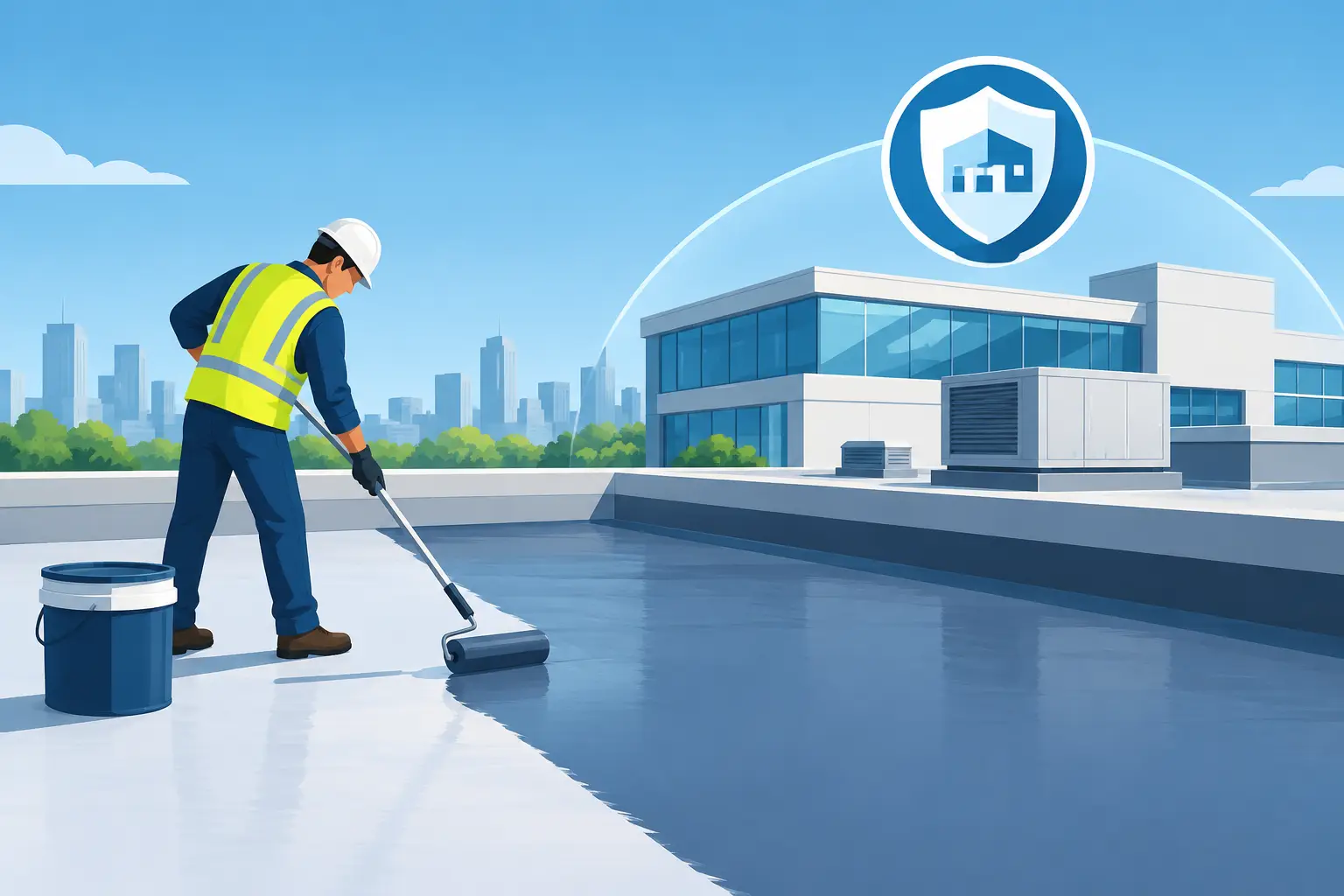
A roof leak rarely stays a roof problem. Water entering above a tenancy, plant room, warehouse floor or common area can damage ceilings, insulation, electrical services and stock before it becomes visible below. Commercial roof waterproofing is therefore not simply a repair task. It is an asset-protection measure that helps keep buildings safe, operational and fit for purpose through changing weather conditions.
For facility and property managers, the priority is to identify the true source of water ingress, control immediate risk and select a repair that suits the roof’s condition and remaining service life. Applying another layer of sealant over a recurring leak may keep water out temporarily, but it can also conceal wider membrane failure, trapped moisture or deteriorating roof details that require a more considered scope.
Why roof leaks create wider operational risk
A small ceiling stain can be the first visible sign of a much larger issue. Water may travel along roof sheeting, structural members, insulation or service penetrations before finding a path into the building. By the time occupants report drips, the roof system may have been holding moisture for weeks.
The direct cost of a leak is only part of the exposure. In occupied assets, water ingress can delay tenancy handovers, force a work area out of use, damage finishes, create slip hazards and interrupt electrical or mechanical equipment. In industrial settings, it can affect stored materials, production areas and workplace safety. In strata and community assets, recurring roof leaks quickly become a resident concern and can lead to disputes over responsibility, access and repair timing.
Moisture also creates conditions for mould growth and corrosion. If insulation becomes saturated, it may lose thermal performance, increasing heating and cooling demand while remaining hidden above ceilings or beneath roof coverings. These are the consequences that make deferred roof maintenance expensive: the failure spreads beyond the original roof defect.
Commercial roof waterproofing starts with diagnosis
Effective waterproofing begins with an inspection of the whole roof assembly, not just the point where water has appeared internally. A competent assessment considers roof falls, drainage paths, ponding water, sheet laps, flashings, expansion joints, penetrations, gutters, outlets and the condition of previous repairs.
The roof type matters. Metal roofs can fail at fasteners, laps, deteriorated sealants, penetrations and poorly detailed flashings. Membrane roofs can be affected by blistering, splitting, punctures, UV degradation, joint failure or loss of adhesion. Concrete roofs may present cracking, failed movement joints or breakdown in the existing membrane system. Each condition requires a different repair approach.
Access and building use also shape the scope. A roof above a live retail tenancy or sensitive equipment room may require staged works, weather planning and close coordination with occupants. A warehouse roof may allow broader access but need careful management around skylights, services and high-risk work areas. The best technical solution is not always the most practical one if it cannot be installed safely without unnecessary disruption.
The value of moisture and defect investigation
Visual inspections are essential, but they do not always reveal the full extent of deterioration. Where leaks are recurring or the source is unclear, further investigation can help separate an isolated defect from system-wide failure. This may include targeted opening-up works, moisture testing or controlled water testing where appropriate.
The goal is scope certainty. Facility managers need clear advice on whether a localised repair is reasonable, whether an existing coating can be restored, or whether the asset has reached the point where a capital upgrade is the better commercial decision. That distinction prevents budgets being consumed by repeat call-outs that never address the root cause.
Choosing the right waterproofing approach
There is no universal waterproofing product that suits every commercial roof. The appropriate system depends on substrate condition, roof geometry, drainage, foot traffic, exposure, existing materials and the asset’s planned future.
Localised repairs can be cost-effective where the roof is generally sound and defects are isolated. Typical examples include replacing failed flashings, resealing penetrations, repairing damaged membrane sections or addressing blocked drainage points. This approach is practical when inspection confirms the surrounding roof system still has reliable service life.
Restoration coatings may be suitable for roofs showing broad surface ageing but retaining sound structural integrity and adhesion. A correctly specified coating system can improve weather resistance and, depending on the product selected, assist with solar reflectance and roof temperature management. Surface preparation is critical. Coatings applied over contaminated, wet or unstable substrates are unlikely to deliver the expected life.
Full membrane replacement or roof renewal is usually more appropriate where widespread failure, trapped moisture, severe corrosion, repeated leak history or end-of-life materials are present. This is a larger capital works decision, but it can provide better long-term cost control than reactive patching. It may also be the right time to improve drainage, replace failing flashings, upgrade safety access or coordinate other rooftop services.
Details cause most waterproofing failures
Large roof areas attract attention, yet many leaks begin at the transitions. Pipe penetrations, air-conditioning supports, skylights, parapets, box gutters, roof-to-wall junctions and changes in material all need careful detailing. These locations move differently under heat, wind and building settlement, and they are often disturbed when other trades access the roof.
Poor drainage compounds the problem. Leaves, silt and rubbish can block outlets and gutters, causing water to pond against laps and flashings not designed for prolonged immersion. On low-slope roofs, even minor settlement can change water flow and expose vulnerable details. Waterproofing and roof drainage should therefore be assessed together rather than treated as separate maintenance items.
Trade coordination matters here. A new electrical conduit, mechanical service or solar installation may create penetrations that affect waterproofing integrity. Without clear responsibility for reinstatement and inspection, a seemingly small rooftop modification can become the next leak. An integrated facilities partner can coordinate these interfaces and ensure repairs are not undermined by later works.
Planned maintenance protects the repair investment
Waterproofing works should not end when the contractor leaves site. A roof needs planned inspections to identify deterioration before the next major weather event exposes it. The appropriate frequency depends on roof type, age, tree coverage, building location, traffic levels and the consequences of failure, but inspections after severe storms and before wetter periods are sensible operational controls.
A practical maintenance program usually focuses on clearing gutters and outlets, checking flashings and sealants, inspecting penetrations, identifying corrosion or membrane damage, and recording areas of ponding water. It should also track repair history. Repeated failures in one location can indicate drainage issues, building movement or a detail that needs redesign rather than another patch.
Documentation is valuable for more than maintenance planning. Inspection records, photographs and repair scopes give owners and managers a clearer basis for budgeting, contractor accountability and capital planning. They also help demonstrate that foreseeable defects have been managed in a disciplined way.
When reactive repairs are still necessary
Even well-maintained roofs can be damaged by storms, fallen branches, foot traffic or unexpected service works. When water is entering an occupied building, the immediate priority is to make the area safe, protect people and assets, and stop further ingress where conditions allow.
Emergency repairs should then be followed by a permanent assessment. Temporary measures such as sealants, covers or local patches can be appropriate to stabilise the situation, but they should not be mistaken for a durable solution without confirming the surrounding roof condition. This is where reactive maintenance needs to feed back into the planned maintenance program.
What a clear waterproofing scope should include
A quality scope makes it easier to compare proposals and reduces the risk of assumptions on site. It should identify the roof areas and defects to be addressed, preparation requirements, proposed materials, treatment of penetrations and junctions, drainage-related works, access arrangements and protection of occupied areas.
It should also set out how the work will be inspected and handed over. For larger programs, staged work zones, weather contingencies and coordination with tenants or site operations may be just as important as the membrane specification. The right contractor should be able to explain the reason for the recommended solution in plain English, including its limitations and expected maintenance needs.
TWS Service & Solutions approaches rooftop works as part of broader asset reliability. Waterproofing, commercial metal roofing, drainage, building access and surrounding trade services often intersect, and a coordinated scope helps avoid gaps between contractors.
A dry roof is not merely a cleaner-looking asset. It protects the spaces, people and systems beneath it. When inspections, repairs and capital decisions are based on the actual condition of the roof rather than the latest ceiling stain, facility teams can reduce disruption and direct maintenance spend where it will have the greatest long-term value.