
Commercial Fire System Maintenance That Prevents Failures
Tue, 13 Oct 2026
A fire door wedged open for a delivery, a sprinkler isolation valve left in the wrong position, or a flat battery in a fire indicator panel can turn a manageable incident into a major operational failure. Commercial fire system maintenance is the disciplined work of finding and correcting those weak points before an emergency exposes them.
For facility managers, the issue is not simply arranging a test to tick off a compliance requirement. It is maintaining a system that must perform across occupied tenancies, plant rooms, loading areas, kitchens, warehouses and shared spaces - often after years of alterations, reactive repairs and changing building use.
What commercial fire system maintenance should achieve
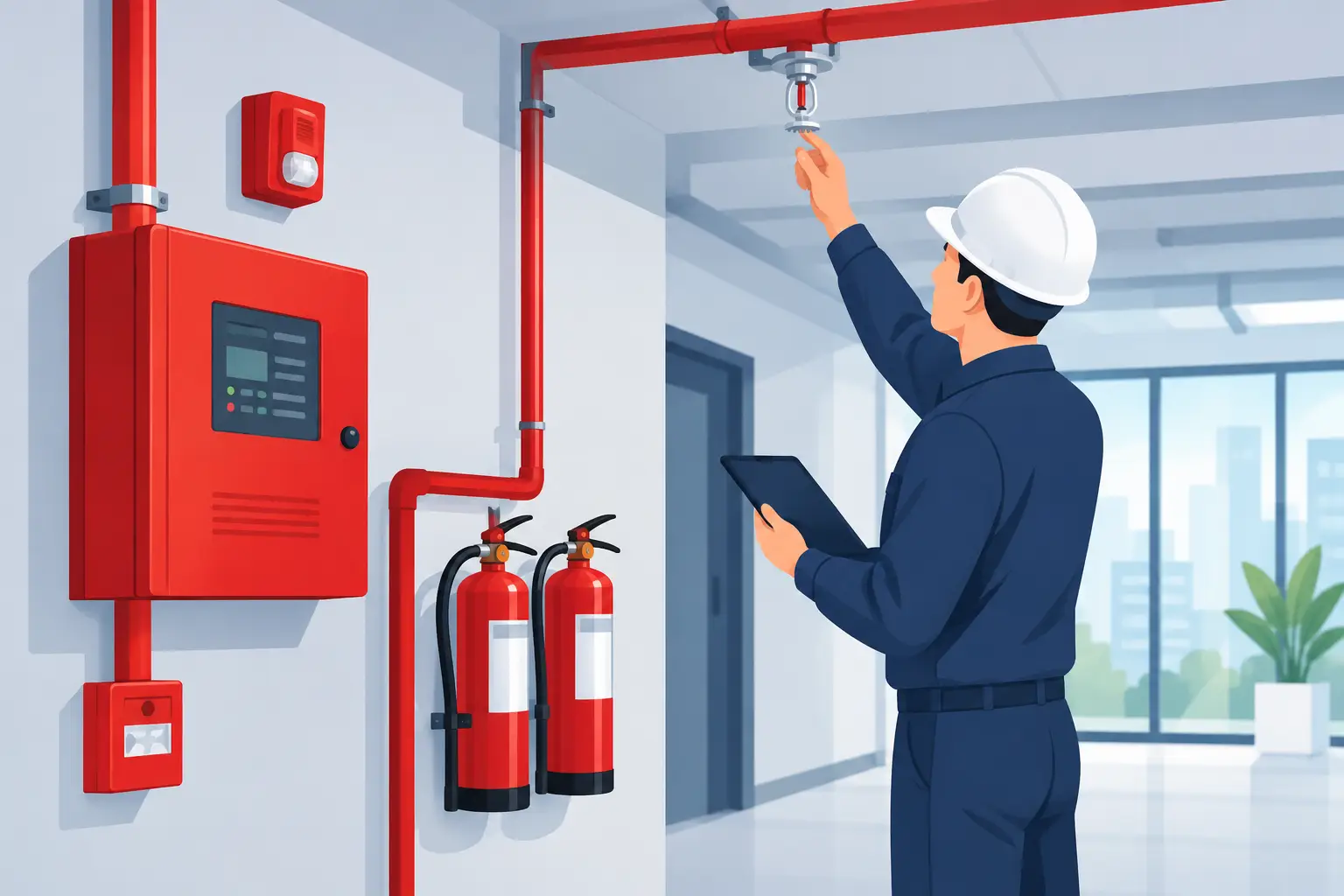
A properly managed maintenance program keeps active and passive fire measures serviceable, visible and coordinated. Active systems detect, alert, suppress or assist evacuation. They may include fire detection and alarm systems, sprinkler systems, hydrants, hose reels, extinguishers, emergency warning and intercom systems, emergency lighting and exit signs.
Passive fire measures contain fire and smoke long enough for people to evacuate and emergency services to respond. Fire doors, fire-rated walls, penetrations, dampers, fire collars, seals and access panels all form part of this protection. They are often overlooked because they do not have a panel, gauge or alarm tone to draw attention to a defect.
The objective is asset reliability, not paperwork alone. Service records matter, but they cannot compensate for a blocked hydrant, inaccessible extinguisher, compromised fire wall or disabled detector. Maintenance must verify that equipment is present, accessible, correctly configured and capable of operating as intended.
In Australia, maintenance requirements are generally informed by the building's fire safety schedule, applicable legislation, relevant Australian Standards and the specific installed systems. The exact inspection and testing regime depends on the asset, its classification, system design, occupancy and authority requirements. A warehouse with sprinklers and diesel pumps needs a different program from a strata building with common-area detection, emergency lighting and fire doors.
Start with an accurate picture of the asset
Many maintenance problems begin with incomplete information. A contractor may service visible equipment while undocumented alterations remain in the ceiling, riser or plant room. A tenancy fit-out can affect detector coverage, fire door operation, exit access and the integrity of fire-rated barriers without being captured in the asset register.
A useful starting point is a site review that confirms what is installed, where it is located, what condition it is in and which defects require priority action. This should include available drawings, prior test records, the fire safety schedule, essential safety measures documentation and known defect history.
The review should also consider how the building actually operates. Are loading dock doors regularly propped open? Does dust affect detector performance in an industrial area? Are emergency exits obstructed during events? Has storage expanded into areas needed for hose reel or hydrant access? These everyday operating conditions are where theoretical compliance can break down.
For multi-site portfolios, consistency is valuable. A central asset register, standardised defect categories and clear service reporting allow managers to compare sites, prioritise capital works and identify recurring failures. It also reduces the risk of one site receiving thorough attention while another relies on outdated reports and reactive call-outs.
Plan maintenance around risk, not just calendar dates
Scheduled inspections are essential, but calendar-based visits are only part of the job. Higher-risk areas may require closer operational checks between formal services. A commercial kitchen, for example, faces grease, heat and changing equipment layouts. An industrial site may deal with dust, vehicle impact, vibration or corrosive conditions. A residential community may have common areas where occupants inadvertently obstruct exits or tamper with equipment.
A practical program separates routine scheduled servicing from defects, repairs and capital upgrades. That distinction gives building owners clearer cost control. It also prevents a serious repair from being hidden inside a routine service scope without a defined recommendation, price and priority.
Defects should be reported in plain operational terms. Rather than merely recording a failed component, the report should explain the consequence: a fire door does not self-close, smoke may travel through an unsealed penetration, a pump fault may affect sprinkler availability, or an exit sign is not visible from the required path of travel. That makes it easier for property managers and boards to approve works based on risk and business impact.
Not every issue needs an immediate replacement. Some defects can be monitored or addressed during a planned shutdown. Others cannot wait because they affect life safety, compliance or system availability. The right response depends on the system affected, the building's risk profile, available redundancy and the measures that remain operational while repairs are arranged.
Commercial fire system maintenance needs coordination
Fire systems do not operate in isolation. Electrical supply, mechanical services, plumbing infrastructure, security systems, building works and tenancy operations can all affect performance. A false alarm issue may have an electrical, environmental or operational cause. A water pressure concern may require investigation of valves, pumps, tanks or supply conditions. A fire door defect may be linked to an uneven floor, damaged frame or poorly managed access control.
This is where a multi-trade maintenance approach has practical value. Instead of treating every fire defect as a separate contractor problem, the maintenance plan can coordinate the trades needed to resolve the root cause. A compromised fire-rated penetration, for example, may require electrical or plumbing works to rectify the service route before passive fire sealing is reinstated.
Coordination also matters when systems need to be isolated. An isolation should be planned, controlled, communicated and reinstated without ambiguity. Occupants, site security, monitoring providers and relevant stakeholders may need to know what is affected, for how long and what temporary risk controls are in place. At the end of the works, the responsible party should confirm that the system is back in service and that records have been updated.
Poor isolation management is one of the most avoidable risks in facilities maintenance. The work may be technically sound, but if a valve is not restored, an alarm point is not re-enabled or a panel fault is left unresolved, the building can remain exposed after the contractor has departed.
Do not let passive fire defects become invisible
Passive fire services deserve the same attention as alarms and sprinklers because defects can be difficult to spot during daily operations. A cable installation through a fire-rated wall, a new pipe penetration, damaged door seals or a door closer adjusted for convenience can reduce compartmentation.
These issues frequently arise during minor fit-outs and reactive trade works. A new data cable, plumbing modification or access opening may appear insignificant, yet it can compromise a fire-rated barrier if the work is not properly assessed and reinstated. This is why fire protection considerations should be built into work planning, not raised after the ceiling has been closed or the tenancy handed back.
Routine inspections should look for damaged doors, missing tags where applicable, gaps around penetrations, unsealed openings, altered walls and obstructions that prevent doors from closing. Repairs should use suitable systems and be documented so future maintenance teams can understand what has been installed.
Use reporting to drive decisions
Maintenance reports should help an asset manager decide what to do next. They should identify completed work, test results, defects, recommended actions, urgency and any limitations that prevented full testing. Clear photographs and asset-specific references are particularly useful where the decision-maker is not based on site.
The best reports also show patterns. Repeated false alarms, recurring door damage, frequent extinguisher tampering or ongoing water supply faults point to a broader operational issue. That may call for a change in tenant procedures, better physical protection, staff awareness, design modification or a capital upgrade rather than another short-term repair.
TWS Service & Solutions approaches fire maintenance as part of wider asset care, coordinating planned servicing, reactive repairs and related building works where a defect crosses more than one trade. This reduces hand-offs and helps ensure repairs support the building's long-term operating performance rather than simply returning an item to service for the moment.
Give site teams a role between service visits
Site personnel are not expected to replace qualified fire technicians, but they can identify changes quickly. A simple internal process for reporting damaged doors, blocked exits, panel faults, leaks in fire service areas, missing extinguishers and unauthorised storage can prevent small issues from remaining unresolved for months.
Facility managers should also make sure contractors and tenants understand basic site rules. Fire doors should not be wedged open. Access to equipment must remain clear. Any work that penetrates walls, ceilings or floors in fire-rated areas should be assessed before completion. And alarm or suppression system isolations must never be treated as informal arrangements.
The strongest maintenance program is one that makes defects visible early, assigns responsibility clearly and turns recurring faults into planned improvements. That is how fire protection becomes a dependable part of building operations, rather than a concern only when an inspection is due or an alarm starts sounding.